


Michael Jordan scores 69 points—a Bulls franchise record
Jordan poured in 69 points in a 117-113 overtime win at Cleveland on March 28, 1990—the highest single-game total in Chicago Bulls history.
69
Most points in a Bulls game
Log Chicago Bulls games and watch your arena record grow. Ticket Timeline helps fans of the Bulls track nights at the United Center and other NBA arenas they've visited through attended games.
For iPhone & Android
Jordan poured in 69 points in a 117-113 overtime win at Cleveland on March 28, 1990—the highest single-game total in Chicago Bulls history.
69
Most points in a Bulls game
Tied game, final shot at the horn—about as dramatic as basketball gets.
~1.2% of games
End on a buzzer-beater
Guy Rodgers posted 20 assists in a historic individual performance at bulls during the 1966-67 season — the 16th 20-assist game in nba history.
16th
20-ASSIST GAME IN NBA HISTORY
When enough games are in your archive, Ticket Timeline can rank nights you attended — for example a high-attendance Bulls game. This card is an illustration, not a logged result.
#4
Example rank, not an observed game
40-point triple-double—elite scoring with full box-score control.
0.2% of games
About 1 in 500 chances
Buildings the Bulls have called home in the attendance data Ticket Timeline uses—useful when an old ticket names a former arena from before the United Center.
Coverage in Ticket Timeline's game data starts in 1966, the Bulls' founding season—a data-coverage year, not a wider franchise claim.
Chicago Stadium was demolished after the Bulls moved out in 1994; it's a separate building from the United Center next door, not an earlier name for it.
Chicago Bulls play home games at the United Center in Chicago, IL, USA. Dates for those nights are anchored in Central time. The building list above is what Ticket Timeline uses when an older ticket names a former arena or an earlier name of the same building.
Use that timeline when dating a night: International Amphitheatre (1966–1967) is a former home—a different building from the United Center, not a rename; and Chicago Stadium (1967–1994) is a former home—a different building from the United Center, not a rename. Rebuilding Bulls attendance is usually a scavenger hunt: paper tickets and PDF confirmations, camera-roll scoreboard dates, calendar invites, season-ticket statements, and memory anchors (companions, rivals, life events, arena names on stubs). Work season by season; a partial list of attended games is enough to start matching opponents and arenas. When confirmations live in Gmail, import games you've attended walks through a read-only preview before anything is committed. For a shoebox of stubs, see what to do with old ticket stubs.
Once you've logged Bulls games you attended, Ticket Timeline surfaces the attendance story—not a live scoreboard. Visited insights can include International Amphitheatre (1966–1967), Chicago Stadium (1967–1994), and the United Center (1994–present).
For iPhone & Android
Bulls home games today are at the United Center. Former homes live in the venue timeline above—use those when an old ticket does not say United Center.
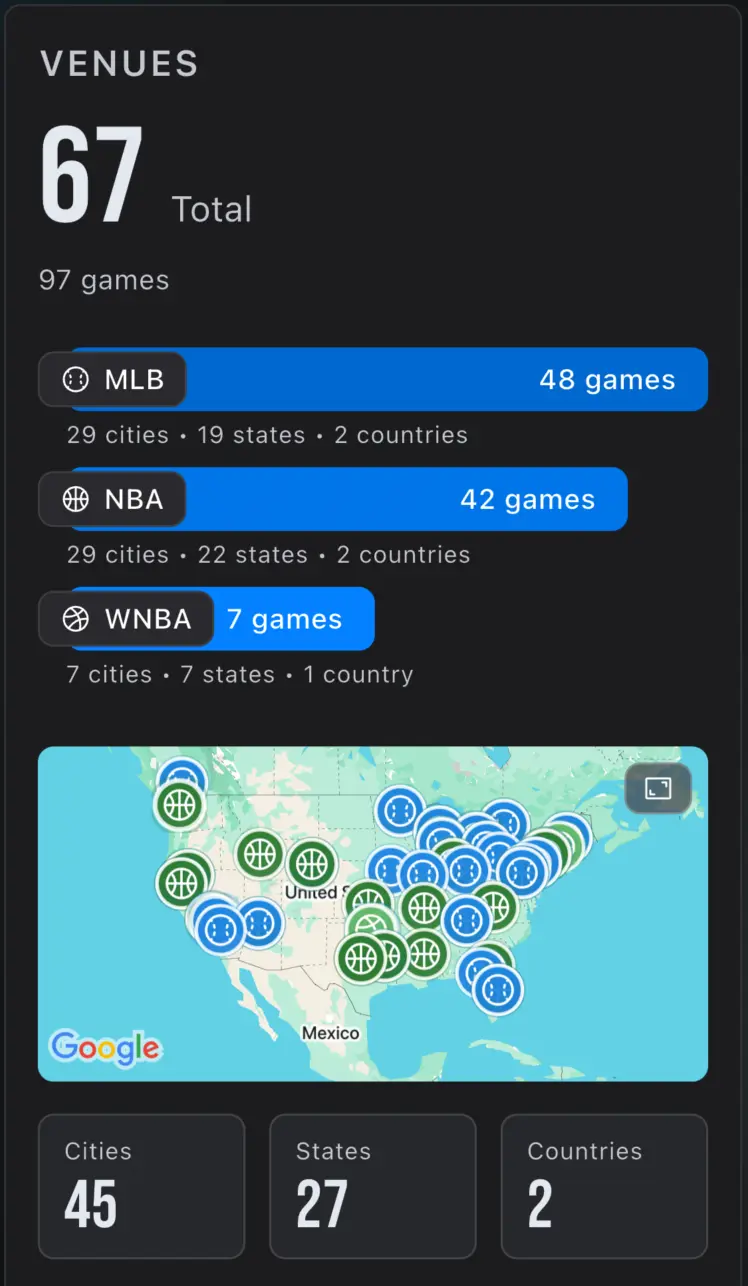
Add Bulls games from memory, import a spreadsheet, or scan ticket stubs. Ticket Timeline links each attended game to NBA context—teams, arenas, players, and notable moments—so nights at the United Center and elsewhere become a browsable Chicago Bulls archive. Primary focus on this page: venue progress over seasons.
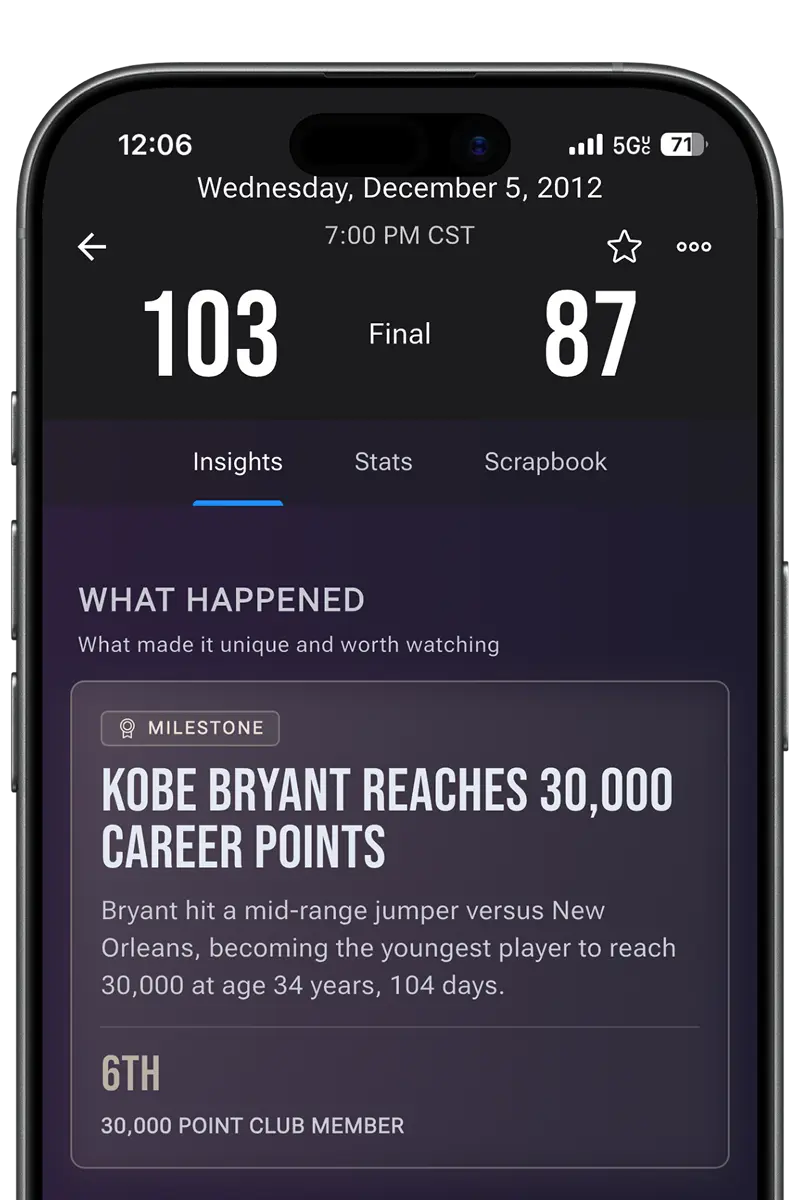
Each attended Bulls game can update your arena history. Start with the United Center, then keep adding NBA games as you visit more arenas.
If you were there when the Bulls still called Chicago Stadium home—the Madhouse on Madison—your stub names a different building, not an earlier name for the United Center next door. Each arena you log adds venue progress through Chicago.
Related team relationships for fans rebuilding attendance history across shared metros and venues.
Ticket Timeline tracks attended Chicago Bulls games and the arena history around them—starting with United Center and expanding as you visit more NBA arenas.
Search, import, scan, or add games manually. Each attended Bulls game can update your arena progress while preserving matchup and moment context.
Yes. Ticket Timeline helps you see arena progress across the Bulls and NBA games you've attended, so you can revisit which arenas you've been to and keep building that record over seasons.
Yes. You can import a spreadsheet of attended Bulls games, and Ticket Timeline also supports finding games from Gmail ticket confirmations with a read-only, preview-before-commit flow. That makes it easier to reconstruct years of history without retyping every date.
No. Ticket Timeline does not sell tickets. It is an app for tracking NBA games you've already attended and exploring the story behind your fandom.
Yes. Each attended Chicago Bulls game can contribute to your venue history, starting with the United Center and growing as you attend games at other venues.
Yes. Ticket Timeline helps you track Chicago Bulls games you attended at United Center, then connect those nights to players, performances, milestones, and arena memories.
Yes. Your timeline can help surface the players and teams connected to your attended Bulls games, so memorable performances are easier to revisit.
Log attended Chicago Bulls games and grow your arena record over time.
For iPhone & Android